


Increasing Marketing Conversions with AI-Powered Strategies
Today, AI technologies are radically transforming marketing processes. Businesses, in particular, are personalizing customer experiences while simultaneously increasing efficiency. Furthermore, AI both automates marketing processes and accelerates data analysis. Furthermore, AI makes significant contributions to understanding customer behavior. As a result, traditional marketing methods are no longer sufficient.
As customers expect personalized experiences, businesses are also beginning to leverage AI. In this context, AI enables brands to deliver the right message at the right time. Ultimately, AI provides businesses with a competitive advantage while also improving customer satisfaction.
What is Artificial Intelligence (AI)?
Artificial intelligence is a technology that gives computer systems human-like thinking and learning capabilities. In digital marketing, in particular, AI analyzes customer data to optimize marketing strategies. Furthermore, AI processes large data sets and performs analyses that marketing teams cannot perform manually.
For example, an e-commerce site can use AI to segment millions of customers, allowing it to develop tailored campaigns for each segment. Similarly, AI can increase conversion rates by providing personalized experiences.
Automation also accelerates content creation and simplifies campaign management. AI also predicts customer purchase journeys to interact with them at the right time. Finally, it analyzes user feedback to improve products and services.
Key Elements of AI-Powered Marketing Strategies
Data analytics, in particular, form the foundation of AI-powered marketing strategies. AI systems analyze customer data in real time, providing insights that inform marketing decisions. This analytical approach measures campaign performance while also calculating customer lifecycle value, enabling more efficient use of marketing budgets.
Secondly, personalization is one of the most powerful aspects of AI marketing strategies. AI creates personalized experiences, increasing engagement and conversion rates. Furthermore, AI increases user engagement with dynamic content recommendations and targeted ads.
Third, automation speeds up marketing processes and reduces errors. Therefore, increased efficiency and an improved customer experience are the natural results of this integration. AI monitors campaign results and instantly optimizes strategies, allowing businesses to adapt quickly.

Transformative Methods of AI-Powered Marketing Strategies
Personalized Content and Experiences
First and foremost, AI creates unique experiences for each customer. Personalized campaigns identify appropriate messages and offers. This approach is applied across all channels, from email marketing to social media ads. Artificial Intelligence Influencer Marketing Strategies is also a key part of this personalization approach.
AI algorithms, in particular, process customer demographics, purchase history, and website interactions to create personalized campaigns. Dynamic content optimization ensures that every customer sees messages aligned with their preferences.
AI also offers content recommendations based on user behavior. Netflix, Amazon, and Spotify are examples of this. AI systems combine a user's past preferences, the behavior of similar users, and trend analysis. As a result, they make recommendations with high conversion potential.
Additionally, AI is focusing more deeply on personal preferences in its recommendation systems, offering content that caters to each user's unique tastes. This personalization strategy increases customer satisfaction and increases average order value.
Collaborative filtering ve content-based filtering algoritmaları ile öneri sistemleri sürekli gelişiyor. Ayrıca AI, kullanıcı etkileşimlerini gerçek zamanlı analiz ediyor. Böylece öneri sistemlerini anlık olarak optimize edebiliyor ve daha doğru, etkili içerik önerileri sunuyor..
Automated Advertising and Content Marketing
First, AI optimizes ads by utilizing budget efficiently and identifying target audiences. Furthermore, AI continuously monitors the performance of each ad campaign, optimizing strategies over time to achieve optimal results.
Platforms like Google Ads and Facebook Ads are constantly improving ad performance using AI technologies. Programmatic advertising completely automates ad buying processes, identifying the most suitable ad locations within microseconds.
Furthermore, thanks to AI’s data analysis and targeting capabilities, ads are shown not only to the right people but also at the right time, significantly increasing conversion rates.
Second, automated content generation saves marketing teams time and resources. AI generates blog posts and social media posts. This technology also automates A/B testing and identifies the most effective content variations.
AI also offers significant advantages in targeting. Machine learning algorithms automatically create customer segments and select the most appropriate messages for each segment. Furthermore, AI can create personalized text for each user, increasing personalization in content creation. This increases engagement rates.
With Natural Language Generation (NLG) technology, AI systems can produce human-quality text. Furthermore, AI adapts the language and tone of content to the target audience, ensuring consistent and effective messaging across every marketing channel.
Customer Communication with Artificial Intelligence and Chatbots
First and foremost, AI chatbots improve customer service and accelerate sales processes. Chatbots provide guidance while answering questions. Thanks to natural language processing technology, chatbots engage in human-like conversations, thus personalizing the customer experience.
Additionally, chatbots analyze customer past interactions and can offer personalized solutions and offers for each individual. During the sales process, chatbots qualify potential customers, share product information, and direct hot leads to sales representatives.
Chatbots also increase customer satisfaction by providing 24/7 service, allowing businesses to meet customer demands more quickly.
Chatbots also collect customer data, providing valuable insights for future interactions. Fast response times and consistent service quality strengthen customer loyalty and increase repeat purchase rates.
Additionally, chatbots analyze customer questions and feedback, allowing businesses to continuously improve their services. Finally, AI-powered chatbots automatically resolve frequently asked questions (FAQs) and common issues without requiring human intervention, freeing employees to handle more complex tasks.
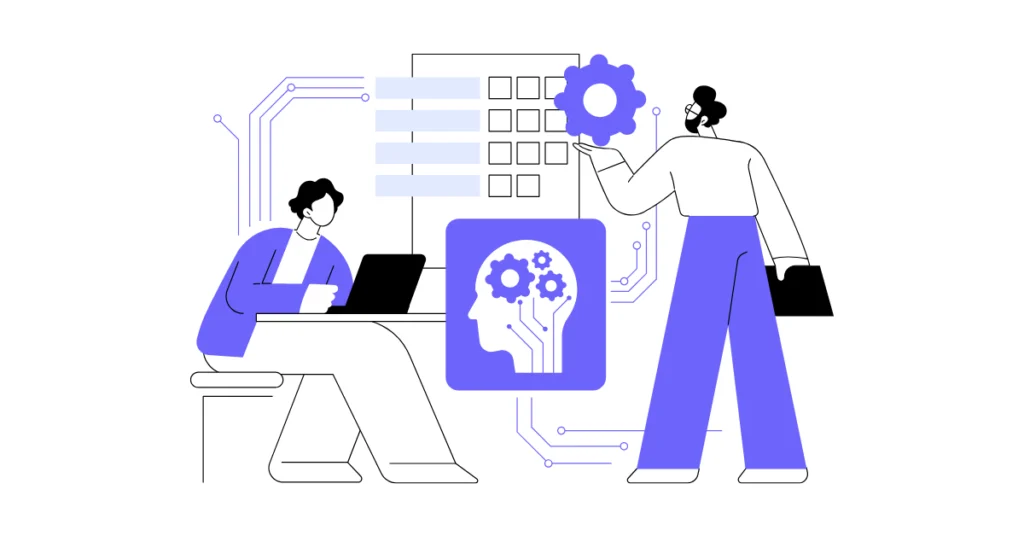
Data Analysis and Marketing Measurement with Artificial Intelligence
Data Collection and Analysis with Artificial Intelligence
First, AI processes large data sets quickly. It analyzes data in minutes that would take days with traditional methods. This rapid data processing capacity enables marketing teams to make real-time decisions.
Artificial intelligence constantly monitors customer behavior, market trends, and the competitive landscape. It makes marketing strategies more effective. AI makes data collection and analysis more systematic.
Data collected from every stage of the customer journey is processed by AI algorithms and transformed into meaningful insights. This data is used in campaign optimization, customer segmentation, and product development processes.
AI systems integrate diverse data sources, providing a holistic marketing view. Predictive analytics predicts future customer behavior, and enables the development of proactive marketing strategies.
Marketing Performance Measurement and Artificial Intelligence
First, AI determines the value of marketing investments by calculating ROI. Each channel and campaign is analyzed individually. This detailed analysis ensures that marketing budgets are directed to the most efficient channels.
AI also processes this data in real time, instantly monitoring the impact of campaigns, enabling rapid optimization. Attribution modeling evaluates all touchpoints that contribute to customer conversion.
AI, however, determines how effective each touchpoint is, allowing future strategies to be more targeted and efficient.
One of the most significant contributions of AI to marketing is accelerating data-driven decision-making. Traditional reporting processes are being replaced by real-time dashboards.
These systems also allow marketing managers to monitor campaign performance in real time and react quickly. Marketing managers can monitor campaign performance in real time and immediately make any necessary optimizations.
AI algorithms detect anomalies and provide early warning of potential problems. Furthermore, AI combines different data sources to provide more comprehensive analysis, enabling more targeted and effective marketing strategies.
This proactive approach enables continuous improvement of marketing campaigns, allowing businesses to adapt quickly to changing market conditions.
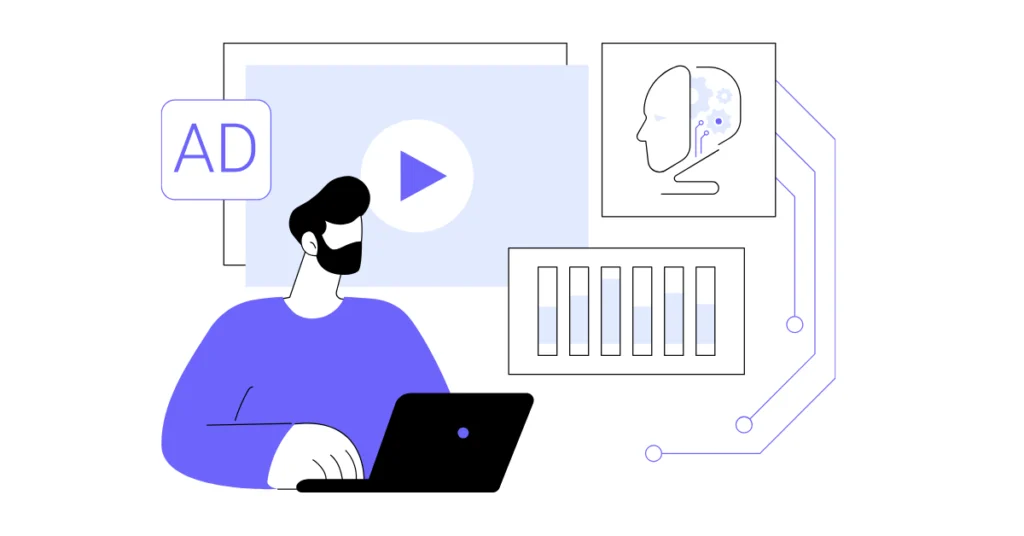
The Future of Digital Marketing with Artificial Intelligence
AI'nin Gelecekteki Pazarlama Stratejilerindeki Yeri
In the future, AI will become even more sophisticated. It will automate almost all marketing processes. The customer experience will become completely personalized, creating unique marketing ecosystems for each individual.
New technologies like voice search, visual search, and augmented reality will be integrated with AI. It will transform marketing strategies. The potential for AI to create innovation is limitless.
In the future, AI will not only optimize existing processes; it will also develop entirely new marketing approaches. In this context, AI will predict dynamic customer behavior and enable brands to engage in active, personalized interactions at all times.
AI systems that predict customer behavior and act proactively to meet needs will shift the marketing paradigm. Furthermore, AI's advanced analytics capabilities will allow businesses to understand customer expectations in real time, helping them deliver valuable content and offers.
This technological advancement will offer businesses unique competitive advantages. It will elevate customer relationships to deeper levels. Ultimately, AI will help brands build stronger connections and increase customer loyalty.
Standing Out from the Competition with AI-Powered Strategies
Businesses that adopt AI strategies significantly differentiate themselves from their competitors. AI technologies enable faster decision-making, more effective customer segmentation, and more efficient resource utilization.
These advantages play a critical role in increasing market share and strengthening customer loyalty. Early adopter businesses are achieving leadership positions in their industries by maximizing the benefits of AI technologies.
The long-term impact of AI on marketing strategies signals fundamental shifts. Traditional marketing approaches are giving way to data-driven, automated, and personalized strategies.
Businesses are investing in developing AI capabilities, accelerating digital transformation processes. This technological evolution is also changing the roles of marketing professionals, requiring the development of new skill sets.
Conclusion
AI-powered marketing strategies represent a necessary transformation reflecting the realities of the digital age. By embracing AI technologies, businesses are improving customer experience, increasing operational efficiency, and boosting marketing ROI.
The opportunities offered by AI in the areas of personalization, automation, and data analytics are significantly increasing the effectiveness of marketing strategies. Omnichannel marketing approaches are becoming more consistent and effective with AI.
The continuous development of artificial intelligence technologies is changing the dynamics of the marketing industry. With edge computing and 5G technologies, AI systems will operate faster and be able to make real-time marketing decisions.
Moreover, these technologies will increase data processing speed, enabling more personalized and instantaneous marketing strategies. Looking ahead, it's clear that AI technologies will continue to evolve and fundamentally transform the marketing industry.
AI can also help businesses optimize customer experiences while ensuring more effective data security and privacy management. Businesses that adapt to this transformation will gain a competitive advantage, while those that lag behind will risk losing market share.
Artificial intelligence investments are no longer a luxury; they're a survival strategy. To improve your marketing performance and outpace your competitors, Examine our solutions. Contact our expert team today to learn more and develop AI marketing strategies tailored to your business.